This article may contain affiliate links. If you buy through them, Growing Up at Home may earn a small commission at no extra cost to you. Learn more.
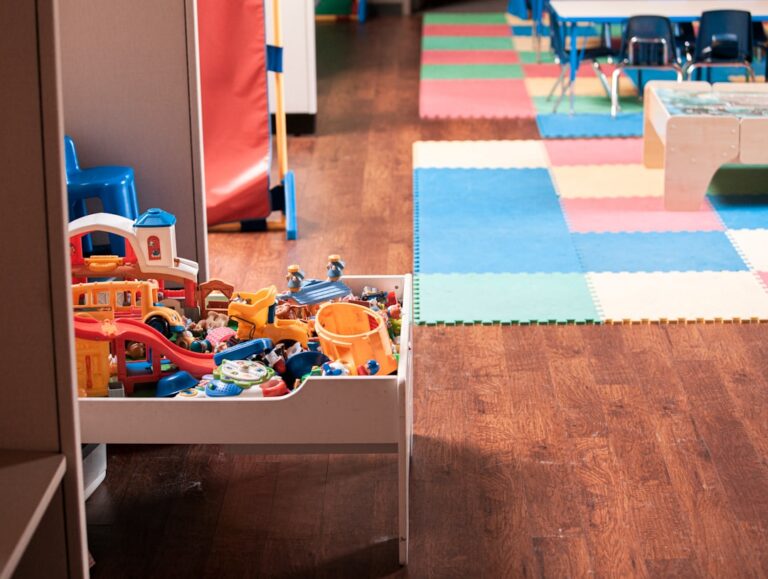
For about two years I could not walk past a pile of toys on the living room floor without stopping to deal with it. Didn’t matter if I was on my way to answer the door or halfway through making dinner. The pile called to me, and I answered, every single time. It took an embarrassingly long stretch of my life to realize that most of what I was cleaning up wasn’t mess. It was just a kid in the middle of something.
There is a difference between those two things and I did not understand it for a long time. Mess, to me now, is toys that are done being used. Play, even when it looks identical from across the room, is toys that are still in service of something happening. A train track half built is not clutter. It is a project. The same track scattered after the kid has moved on to snack time and forgotten it exists, that is clutter. Same pile of plastic, completely different situation.
The threshold I actually use
I do not have a number of toys on the floor that triggers cleanup. What I have instead is a question: is anyone still using this. If my youngest is still narrating a whole saga involving three stuffed animals and a wooden spoon, I leave it, even if it is spread across half the room and I have to step over it to get to the kitchen. If everyone has left the room and the toys are just sitting there being toys, that is when it becomes fair game to scoop up.
This sounds obvious written down. It did not feel obvious when I was living it. My instinct for years was that a tidy room reflected on me somehow, like a visitor walking in and seeing blocks everywhere would think less of the house or, worse, of me. I had to actively talk myself out of that instinct more than once. Nobody who has ever raised a kid looks at a living room with toys in it and thinks anything other than, yep, that’s a house with a kid in it.
What changed my mind
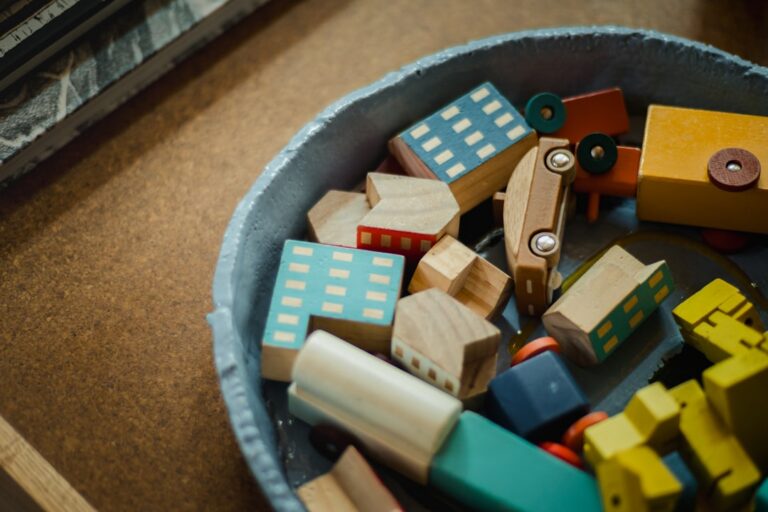
The turning point for me was watching my oldest build the same elaborate block city three days in a row because I hadn’t torn it down at the end of day one. She kept adding to it. By day three it had a garage, a fence, and some kind of dispute happening between two toy horses that I never got the full story on. If I had cleared it the first night because it looked messy, none of that would have happened. That project only existed because the mess was allowed to sit there being unfinished.
I started thinking about it less as tolerating mess and more as protecting unfinished work. Nobody would walk into an office and sweep a half written document into the trash because the desk looked cluttered. Kids’ play deserves roughly the same courtesy, even if it takes up more square footage and involves more small plastic parts underfoot.
Where I still draw a hard line
None of this means I have gone fully hands off. There are a few things that are non negotiable in my house regardless of whether play is ongoing.
- Anything that is a genuine trip hazard on stairs gets moved immediately, mid play or not
- Small parts near where the baby crawls get picked up on sight, no exceptions
- Food left inside toy kitchens or stuffed animals gets pulled out same day
- The kitchen floor itself stays clear enough that I can actually cook without playing hopscotch
Those four things are safety and function, not aesthetics. Everything else, I have made peace with living alongside for as long as it takes to run its course. A stuffed animal parade that has been marching across the couch for three days does not bother me anymore. It bothered me constantly when my oldest was three. The kid did not change. I did.
The end of day reset, not the constant one
What actually keeps our house functional is not that I intervene less, it is that I intervene at a different time. Instead of picking up throughout the day, we do one reset before bed. Everyone helps, even the toddler in whatever limited capacity a toddler helps, which mostly means putting one thing in a bin and then getting distracted by the bin itself for ten minutes. The point isn’t efficiency. The point is that the house gets a clean slate once a day instead of me chasing tidiness in fifteen minute increments that never actually add up to anything.
The mess was never the problem. My relationship to the mess was the problem.
I think a lot of the anxiety around toy mess comes from picturing an audience that mostly does not exist. Nobody is grading my living room. The people who do walk through it, family, the occasional friend, have their own kids and their own floors covered in the exact same plastic animals and wooden puzzle pieces. The pressure was self imposed, and once I noticed that, it got a lot easier to let a pile of blocks sit there overnight without feeling like I was failing at something.
What I would tell someone just starting this
If you are early in this and every toy on the floor feels like a task waiting to be done, try asking the same question I eventually landed on. Is this still being used. If yes, step over it and go on with your day. If no, and it has genuinely been abandoned, then go ahead and clear it, guilt free, because that part actually is just mess. Most of what looked like chaos to me for two years turned out to be evidence of a good afternoon. I just needed to stop treating the evidence like a crime scene.