This article may contain affiliate links. If you buy through them, Growing Up at Home may earn a small commission at no extra cost to you. Learn more.
Cleanup time used to be the worst fifteen minutes of our day, every day, without fail. I would announce it was time to clean up, my daughter would ignore me, I would announce it again with more edge in my voice, and by the third round we were both frustrated and I usually ended up doing most of the picking up myself while narrating how unfair that felt. This happened on a loop for what felt like most of a year before something finally shifted, and it was not a chart or a timer or a reward system, all of which I tried and all of which fizzled within a couple weeks.
What actually changed things was noticing how I was phrasing the request itself. I was saying some version of clean up your toys, which is an enormous, vague instruction to hand a three year old. Clean up your toys means what, exactly. Where do they go. Which ones first. An adult would struggle with an instruction that open ended if it applied to, say, an entire messy garage. I was handing my daughter the toddler equivalent of that garage and expecting her to know where to start.
Breaking the instruction down
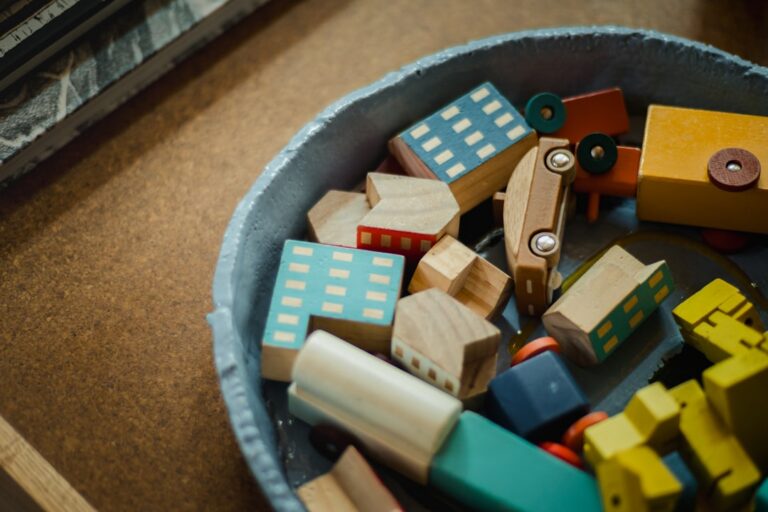
The shift that worked was getting absurdly specific instead of general. Instead of clean up your toys, I started saying things like, can you put the blue blocks in this basket, and handing her the basket while I said it. One category, one container, one clear action. When that was done, a new specific instruction followed. Put the books back on the shelf. Put the stuffed animals on the bed.
This took longer to say out loud than one broad instruction would have, but it took dramatically less time overall because she actually knew what to do at each step and did it without the standoff. The vague instruction had been generating resistance not because she was defiant but because she genuinely did not know how to begin. Once beginning was obvious, most of the resistance disappeared with it.
Doing it alongside instead of announcing it
The second piece that mattered was physically joining in rather than issuing instructions from the doorway. Early on I treated cleanup as her job that I was supervising. That framing alone seemed to invite pushback, like I was handing down an assignment rather than sharing a task. When I got down on the floor and started picking things up myself while giving the specific instructions, the whole dynamic softened. We were doing something together, not her serving a sentence I was overseeing.
- Give one specific instruction at a time, naming the item and the destination, not a blanket command
- Get down on the floor and clean up alongside them instead of directing from standing
- Narrate what you’re doing rather than what they should be doing, kids often follow along without being told to
- Skip the countdown and threats entirely, they escalated the standoff more than they resolved it in our house
That last point took me the longest to accept, mostly because counting to three had been my default tool for every kind of resistance for a long time. It worked, technically, in the sense that toys eventually got picked up. It also turned every cleanup into a tiny power struggle with a countdown attached, and I do not think that was doing either of us any favors. Dropping it did not make cleanup instant. It made it calmer, which mattered more to me in the end.
What my son needed differently
My son is younger and has approached this whole thing differently than his sister did at the same age. He genuinely likes putting things in containers, something about the action itself seems satisfying to him independent of any instruction from me. For him, cleanup mostly just means putting a basket in front of him and staying close by. He does not need the same specific breakdown his sister needed, though he does need me nearby, since he loses interest fast if left to do it alone.
Watching the two of them respond so differently to the same basic situation was a useful reminder that there is no single trick that works for every kid. What worked for my daughter was specificity and structure. What works for my son is mostly proximity and a container he finds satisfying to fill. Both of them needed me there, just for different reasons.
What stopped working, and what I let go of
The reward chart we tried lasted about two weeks before the stickers themselves became the argument, with cleanup becoming secondary to negotiating over how many stickers a particular task was worth. I do not think reward systems are wrong for every family, but ours turned the actual goal, a calmer cleanup, into a new source of conflict layered on top of the old one. We dropped it without much ceremony and did not replace it with anything else external. The specific instructions and doing it together turned out to be enough on their own.
The mess was never really the problem during cleanup time. The instruction was the problem, and once I fixed the instruction, most of the fight went with it.
If cleanup at your house looks like ours used to, I would try dropping the broad command first, before reaching for a chart or a reward system. Pick one small pile, name it specifically, hand over a container, and get down there with them. It will not be instant. Ours still is not instant, some evenings more than others. But the standoff mostly stopped, and that alone made the last part of our evenings a lot easier to get through.