This article may contain affiliate links. If you buy through them, Growing Up at Home may earn a small commission at no extra cost to you. Learn more.
I have tried four different systems for splitting housework since we had kids, and three of them died within a month. Not dramatic deaths. They just quietly stopped being followed, the way a gym membership stops being used, until one day you notice the chart is still taped to the fridge but nobody has touched it since March.
The fourth one has lasted almost a year now, which in our house counts as a legacy institution. I want to walk through what did not work first, because I think the failures explain the success better than the success does on its own.
The chart
Our first attempt was a laminated chart with columns for each day and rows for each task, plus little magnetic dots you moved when something got done. It looked great in the store. In practice, updating the chart became its own chore, and whoever forgot to move their dot got accused of not doing the thing they had actually done. We spent more energy arguing about the chart than the dishes.
The app
Next we tried a chore-splitting app that let you assign points to tasks and would supposedly balance things out automatically. The problem was that neither of us wanted to open an app to find out we were annoyed at each other. If I was already frustrated that the trash had not gone out, checking a phone screen for confirmation just added a layer of formality to a feeling that wanted to come out as a normal sentence, said out loud, at a normal volume.
The jar of popsicle sticks
This one was almost a joke by the time we tried it. Write a task on a stick, pull one when you have a free ten minutes. It worked exactly twice, both times when we were procrastinating on something else and pulling sticks felt like a fun distraction. As an actual system it had no memory. Nothing tracked what had been done recently, so the same easy sticks kept getting pulled and the dreaded ones sat at the bottom of the jar for weeks.
The spreadsheet
I built a spreadsheet. I am not proud of this, but I want to be honest about the process. It had formulas. It calculated a rolling average of who had done what over the past two weeks. It was, by any objective measure, a beautiful piece of home logistics engineering, and my partner opened it once, said okay, and never opened it again.
What actually stuck
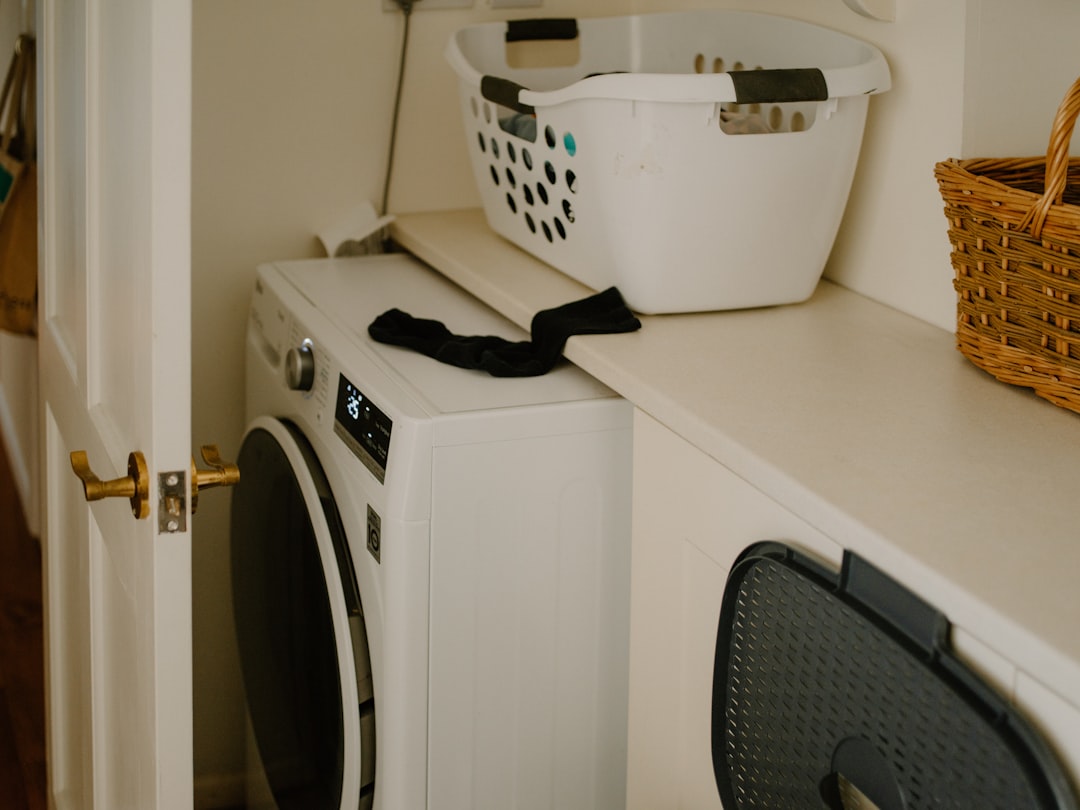
What finally worked was embarrassingly simple, and I resisted it for a long time because it felt too loose to count as a real system. We split the house by zone instead of by task list. I own the kitchen and the laundry. My partner owns the bathrooms and anything related to the kids’ rooms getting picked up at night. Whoever is home handles the living room, because it is the room we both actually live in during the day.
The reason zones work where task lists failed is that a zone comes with judgment attached. If I own the kitchen, I decide when the counters need wiping and when they can wait. Nobody has to ask me to do it, and I do not have to check off a box to prove I did. My partner is not tracking my kitchen decisions any more than I am tracking their bathroom decisions. We each just know our zone is not going to fall apart, and we trust the other person’s zone the same way.
This also solved the resentment problem that every task-list system ran into for us. With a task list, there is always a moment where one person finishes their assigned three things and the other person is still on their second, and it is very easy to feel like you finished first because you work faster, and very easy for the other person to feel like their tasks were just harder that day. With zones, there is no finish line to compare. The kitchen is never fully done. Neither is the laundry. You just tend it.
The system that worked was the one that stopped asking us to keep score.
Where zones fall apart
I want to be fair about the limits here, because I do not think zones are a universal fix. They work for us because our zones are roughly equal in daily burden, and we renegotiated that a few times before it balanced. When my partner started working longer hours for a stretch, we swapped the kids’ room pickup to me temporarily rather than pretending the zone assignment was sacred. A zone system only holds up if you are both willing to redraw the lines when life changes, and some weeks that redrawing conversation is more awkward than just doing an extra load of laundry yourself.
Zones also do not cover the one-off stuff. Nobody owns fix the wobbly drawer or call about the leaking faucet. Those still go into a shared list, which is really just a short list we glance at every week or two, not a system with points or tracking. It is closer to a shopping list than a chore chart, and I think that lower-stakes framing is part of why it does not collapse the way the others did.
The part nobody tells you
Every chore system we tried before this one was designed to be fair, and I think that was the actual problem. Fairness sounds like the right goal, but tracking fairness requires tracking each other, and tracking each other on a granular, daily basis is exhausting in a way that outweighs the benefit of the fairness itself. Zones are not perfectly fair in any given week. Some weeks the kitchen is a bigger job than the bathrooms. But over a year it evens out, and more importantly, neither of us is spending mental energy keeping score to find out.
If you are in the chart-and-app phase right now, I am not going to tell you it is a waste of time. We needed those failures to figure out what we actually wanted, which was less oversight, not more structure. If your current system involves checking on each other, that might be worth a hard look, even if the system looks organized on paper.