This article may contain affiliate links. If you buy through them, Growing Up at Home may earn a small commission at no extra cost to you. Learn more.
For the first year we had a kid old enough to play with actual toys, my partner and I held the line that toys belonged in the kids’ room. The living room was the living room. It had a couch, a rug we liked, and a general absence of primary colored plastic. We were going to keep it that way. That plan lasted exactly as long as it took our daughter to realize the living room was where we were, and she wanted to be where we were, and her toys came with her.
I resisted this for longer than I probably needed to. Every evening involved some version of me carrying an armful of toys back down the hall like I was returning contraband to its rightful cell. She would bring them right back the next morning. Eventually I noticed I was fighting a battle against a very simple fact: kids want to play near their people, not in a room by themselves down the hall.
What finally convinced me to let go
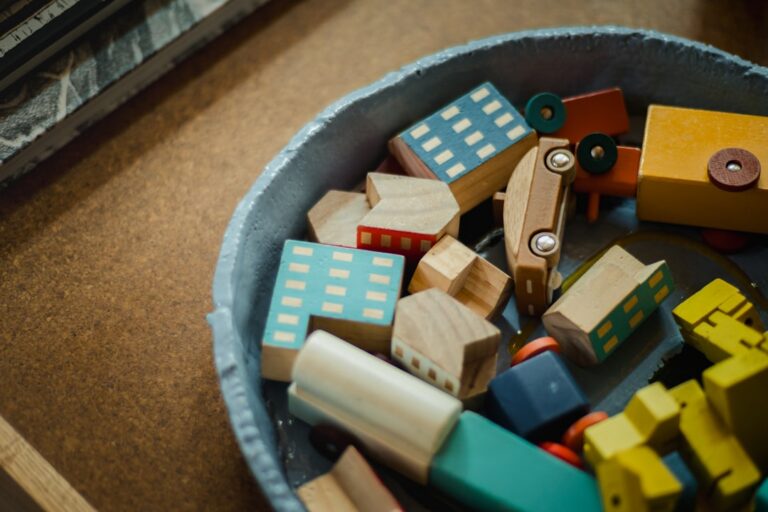
The moment that actually shifted things for me was less a realization and more just exhaustion. I counted one week how many times I moved the same basket of toy cars between her room and the living room. It was eleven times. Eleven trips carrying the exact same basket back and forth because I had decided on principle that the living room needed to stay a certain way, and she had decided, with total consistency, that she wanted to play where we were sitting.
I gave up the principle. The cars stayed in the living room. And within about a week I noticed something I hadn’t expected: she played longer and more independently when she was near us than when she was tucked away in her room. Turns out being in the same space as a parent, even one who is just reading or scrolling on the couch, is its own kind of comfort that lets a kid settle into play instead of drifting in and out looking for company.
The parts I still protect
Letting toys live in the living room did not mean the living room turned into a second nursery. There is a difference between accepting a colonized corner and surrendering the whole floor plan, and I have gotten pretty firm about where that line sits.
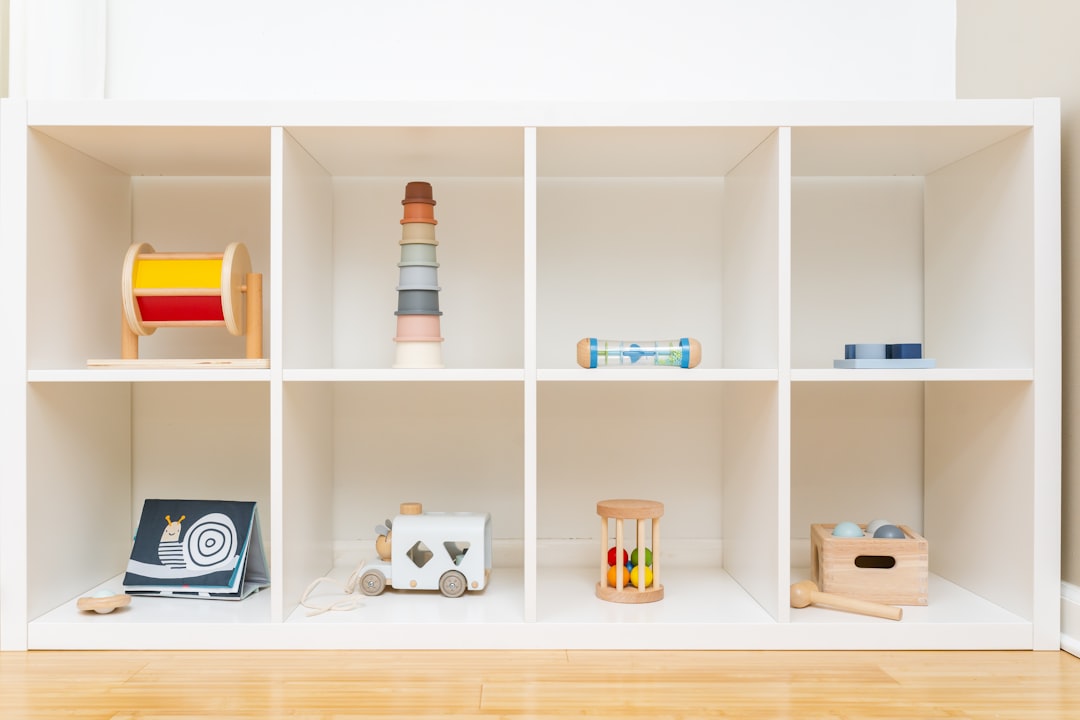
- One shelf and one basket, both low enough for her to reach on her own, hold the rotating toys that live out here
- The couch cushions stay couch cushions, not building material, except during actual fort construction which gets its own approval
- Nothing with more than a handful of small pieces gets left out here overnight, that stuff goes back to her room at bedtime
- The coffee table surface stays clear enough for actual coffee, because some things are still mine
Those boundaries took some trial and error to land on. Early attempts had a full toy bin in the living room, and it just became a magnet for every toy in the house to migrate there over the course of a week. Scaling it down to one shelf and one basket meant the rotation stayed manageable and the room did not fully disappear under plastic.
Why proximity matters more than I expected
I did not grow up thinking about play in terms of proximity to parents. It was more of an assumption that kids play in their room and adults live in the common areas, like there was some unwritten zoning law. Watching my own kid, that assumption fell apart fast. She plays differently, and for longer, when she can glance up and see one of us nearby. It is not that she needs constant interaction. Most of the time she barely looks over. But something about knowing we are there changes how settled she is in the activity.
My son, three years younger, has been the same way, maybe more so. He will haul a dump truck from his room all the way to wherever I am folding laundry, dump a pile of blocks next to me, and play entirely by himself for twenty minutes. If I try to redirect him back to his room he loses interest in the whole thing within a few minutes. The room isn’t the point. Being near us is the point, and the toys are just the vehicle for that.
The tradeoff I made peace with
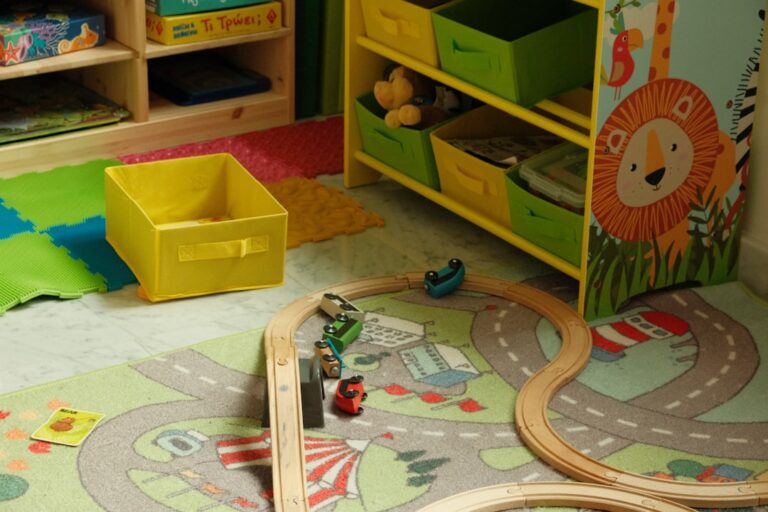
Our living room does not look like it did before kids, and it is not going to again for a while. There is a shelf with toy cars where a side table used to be. There is a basket of stuffed animals next to the couch. Guests notice, and mostly they do not care, because most people visiting a house with young kids in it expect exactly this.
The room was never going to stay pristine. The only choice was whether I spent my evenings fighting that or just living inside it.
What I gave up was a certain look. What I got in exchange was fewer nightly standoffs and two kids who play more independently because they are close enough to us to feel steady doing it. If you are early in this fight, still hauling baskets back down the hall every evening, I would say give it a real trial before you keep fighting it. One shelf, one basket, see what happens. You can always take more territory back later if it stops working. It has not stopped working for us yet.