This article may contain affiliate links. If you buy through them, Growing Up at Home may earn a small commission at no extra cost to you. Learn more.
I assumed the “big kid room” transformation would be one clear moment, something like the crib to bed switch but bigger. It was not. It happened in pieces over about a year and a half, starting with a request for “a desk like my friend has” that I brushed off for months before finally admitting the room needed to change jobs.
The room’s job actually changes, not just the furniture
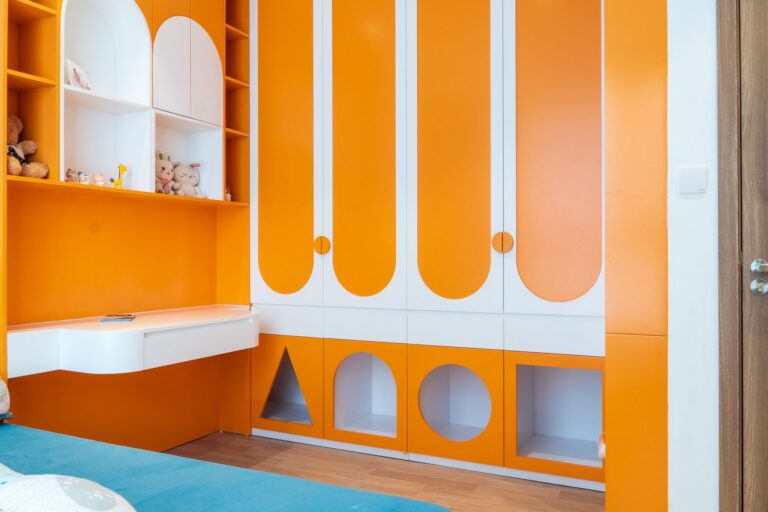
A toddler’s room is built around sleep and play, full stop. A room for a kid doing homework needs a third function layered on top, and that third function has different requirements than the other two. It needs decent light that is not the overhead fixture, a surface that is not the floor, and, this took me a while to figure out, some distance from the toy bins, because a desk positioned right next to the toy shelf is a desk that will lose every time to whatever is on that shelf.
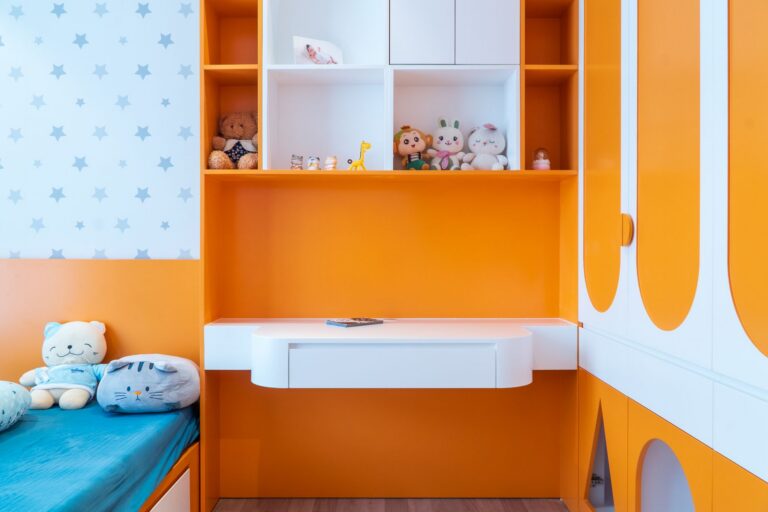
We ended up moving the desk to the wall furthest from the toy storage, which in our room meant it went where the toddler bed used to be relative to the door. That single placement decision did more for actual homework focus than any organizational product we bought.
What the desk area actually needed, in order of how much it mattered
- Light. We added a small desk lamp with a warm, adjustable arm, because the ceiling fixture cast a shadow right over the work surface at the angle our kid sat. This mattered more than anything else on this list.
- A chair that was actually the right height, not a dining chair pulled in from the kitchen. A kid whose feet dangle and whose elbows sit too high at the desk will not last ten minutes at that desk.
- A surface big enough for a laptop and a notebook side by side, which ruled out some of the smaller kid-marketed desks that look great in a showroom and turn out to fit one thing at a time.
- A wall or bulletin board nearby for the stuff that used to live in a backpack pocket, permission slips, a spelling list, a school calendar.
Notice storage for school supplies is last on that list. We started with an elaborate supply organizer and it turned out a single drawer did the job just as well, once the desk itself and the light were right.
The toy corner does not have to disappear, it just has to shrink
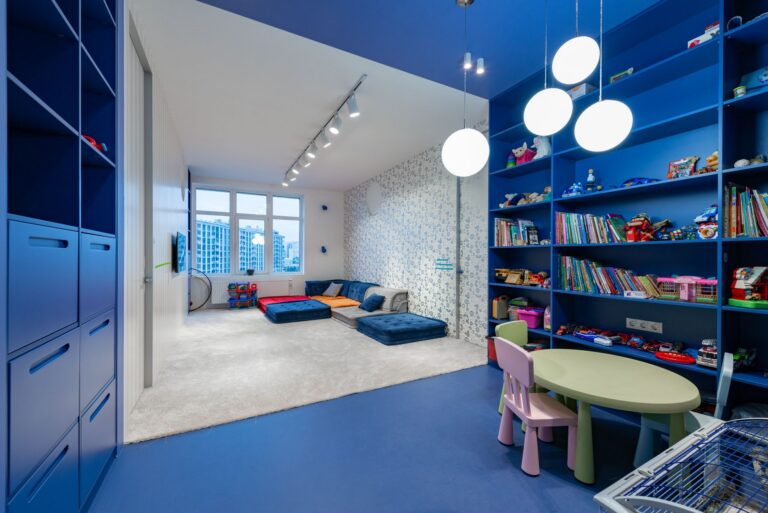
I went into this thinking a homework-capable room meant the play side of the room had to go entirely, and that turned out to be wrong and also a little sad. Kids doing homework still want a room that feels like theirs, not a study hall. We kept a smaller play zone, one open shelf instead of the three we used to have, and it turned out that was plenty. The toys that stayed were the ones actually getting used; everything else had quietly stopped being played with anyway and nobody missed it when it left.
Shrinking the play area told us more about which toys mattered than any decluttering session ever did.
Bed placement matters more than people think
The other change we made was moving the bed away from the desk entirely, onto the opposite wall. Early on we had them close together to save floor space, and it did not work, because a kid sitting at a desk that is three feet from their own bed will end up lying on that bed within ten minutes, homework forgotten. Putting real distance between the two, even in a smallish room, made the desk feel like a different zone with a different purpose instead of an extension of the bed.
Things I would not bother with next time
We bought a corkboard calendar system that was supposed to help with organization and it never got used past the first month. What did get used, constantly, was a plain whiteboard, because it was fast to write on and fast to erase, and a kid doing homework does not want to hunt for pushpins to update a chart. Simple and low friction beat anything that required a process to maintain.
We also skipped a full “study nook” build-out, the kind with a canopy or a themed corner you see online, mostly on instinct, and I am glad we did. Our kid’s taste in what feels comfortable to work in changed within a school year, and a heavily themed setup would have felt dated to her almost immediately. Plain, adjustable, and a little boring turned out to be the version that lasted.
The transition is not really about age
I kept looking for the “right age” to make this switch and never found one. What actually triggered it was homework showing up as a nightly requirement, not a birthday. If your kid is bringing schoolwork home and doing it at the kitchen table every night, that is the actual signal, regardless of what grade or age that happens to land on. Ours was later than some of her classmates and earlier than others, and none of that mattered once the room started working the way it needed to.