This article may contain affiliate links. If you buy through them, Growing Up at Home may earn a small commission at no extra cost to you. Learn more.
By my count we have bought and then donated three different toy storage systems for our oldest kid’s room, each one purchased with total confidence that this was finally the answer. The bins with the cute fabric labels. The over-the-door shoe organizer repurposed for small toys. A cube shelf that looked great in the store and turned into a black hole where things vanished within a month. What we have now, four years later, is the first setup that has not needed to be replaced, just adjusted, and I wish someone had told me the actual principle behind it sooner.
The principle: storage should change its job, not get thrown out
The mistake I kept making was buying storage sized for what my kid owned at that exact moment. A toddler with a dozen board books needs different storage than a 7 year old with a shelf of chapter books, and I kept buying age-specific furniture instead of furniture that could do both jobs at different points.
The pieces that actually lasted were the boring ones. A plain closet with adjustable shelving. An open bookshelf, low enough for a toddler to reach the bottom two shelves and now holding a mix of picture books down low and chapter books up top where a taller kid can reach. A dresser with drawers instead of built-in cubbies, because drawers can hold onesies at one stage and folded jeans the next, while a cubby sized for tiny baby clothes just looks wrong and undersized once the kid grows.
What we actually keep in the room versus what left
- Books stay in the room permanently, just migrating from board books to chapter books on the same shelf.
- Clothes stay in the same dresser and closet, just fewer, bigger pieces per drawer as the kid grows.
- Toys got smaller in volume every single year, and we let that happen instead of fighting it. A toddler’s room needs a lot of toy storage. A 3rd grader’s room needs almost none, because most of the play has moved to a screen, a tablet game, or activities outside the bedroom entirely. We stopped trying to keep toy bins full and just let some of that shelf space get reassigned to school supplies and art materials instead.
- The one thing that left the room completely was the changing table, which we sold within a year of not needing it, since nothing else in a kid’s room can really repurpose that shape.
Low and reachable beats organized and pretty
This is the lesson that took the longest to sink in. I spent real money on storage that looked great in photos, with lids and labels and a system, and none of it survived contact with an actual kid, because a kid will not lift a lid to put something away. They will put it away if the spot is open, low, and obvious, and they will not if it requires two hands and a decision.
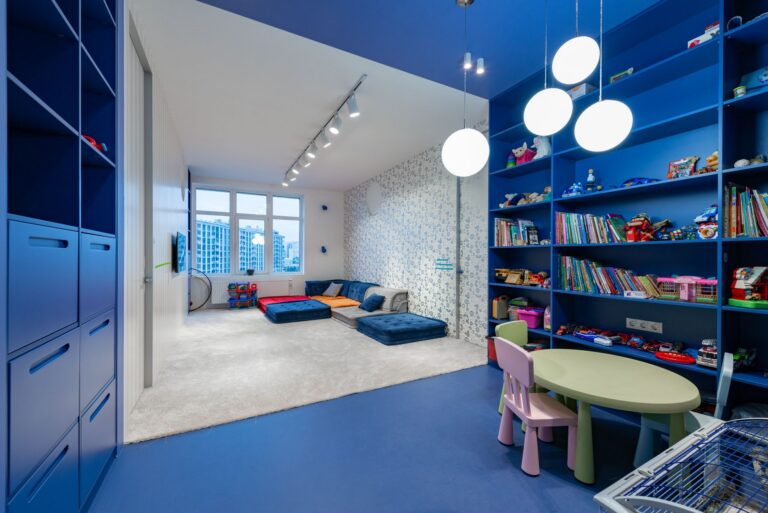
Open bins on a low shelf get used. Anything with a lid becomes a place where things go to disappear.
We switched to open bins with no lids around age 3 and never looked back. As our kid got older, those same open bins on the same shelf started holding art supplies and craft materials instead of blocks and stuffed animals, no new furniture required.
The closet is doing more work than people give it credit for
Kids’ closets are usually built for adult clothes, which means half the rod height is wasted air above a small kid’s shirts. We added a second, lower closet rod when our kid was about 4, which let her hang up her own clothes and actually reach them, and left the original high rod for out-of-season storage bins we shifted overhead. When she got tall enough that the low rod stopped making sense, we removed it and the closet just went back to a normal single-rod setup. That one swap, a rod that could go in and come back out, saved us from ever needing to buy a special kid-height closet unit.
What I would still change
If I were doing this over, I would have skipped buying a toy chest entirely. It seemed like the obvious purchase early on and it was the least useful piece we owned, mostly because things got buried at the bottom and forgotten, and because a toy chest does not do anything else once the kid ages out of toys. Every other piece in that room found a second job as she grew. The toy chest only ever had the one job, and once that job ended, so did the furniture.
The honest summary is that the storage system that worked was the least exciting one. Shelves, a dresser, a closet rod, and open bins, all boring, all adjustable, none of it needing to be replaced just because the kid got older. The system does not need to be clever. It needs to still make sense in three years.